TRANSPORTS
CITROEN
|
 |
 |
|
|||||||||||||||||||||||
| André
Citroën started the first series production of motor cars in 1919 by
converting his former armaments factory. Until then the car had been
the
prerogative of the wealthy and he intended to spread its use to other
social classes. He pioneered the modern concept of creating a sales and
services network that complements the motor car. Citroën's mandate was
characteristically demanding and characteristically simple: to produce
an all-new design for a 10 HP car that would be better equipped, more
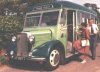
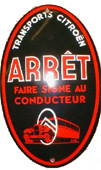
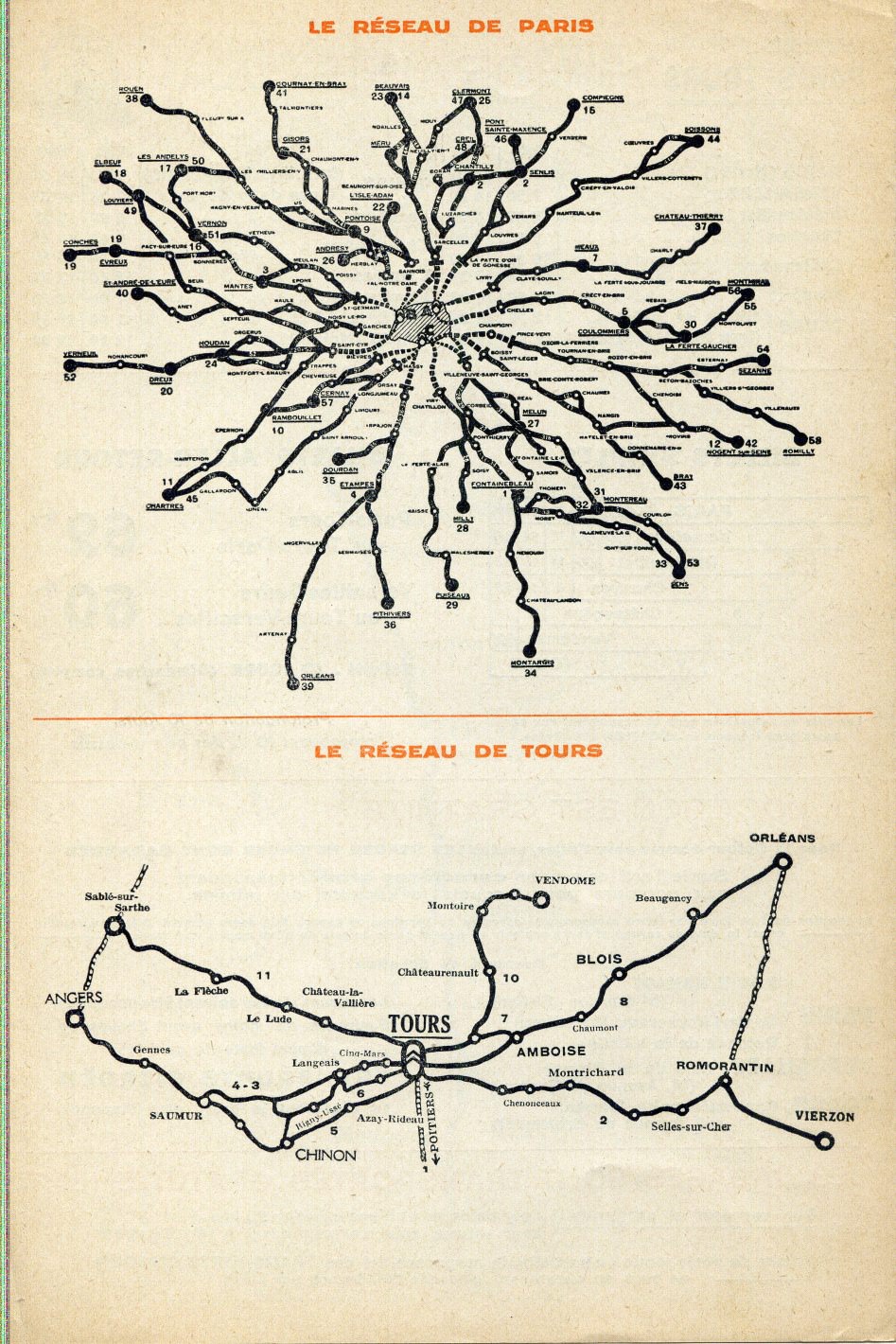
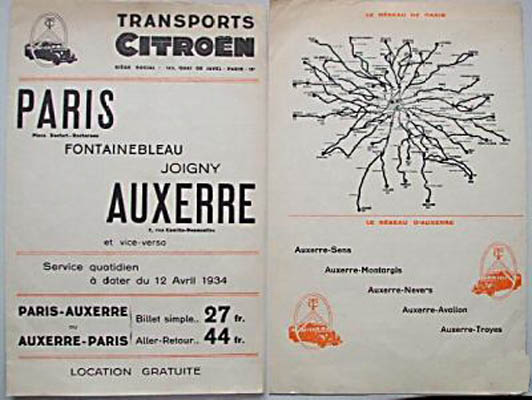
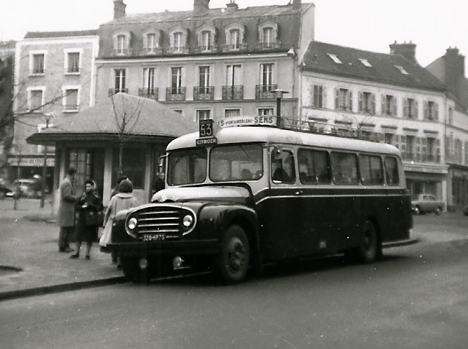
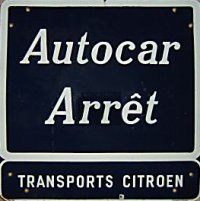
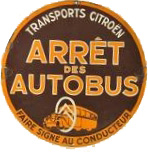
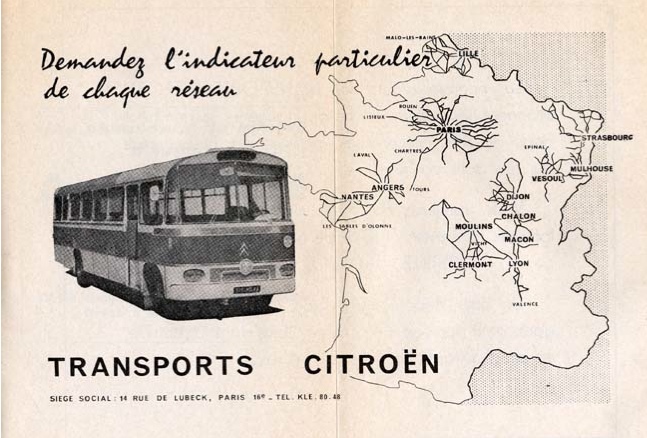
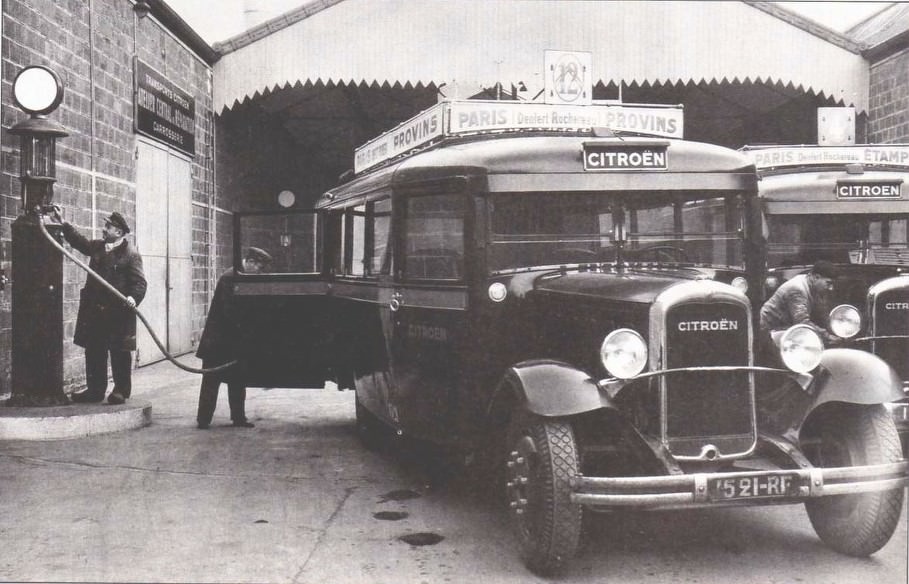
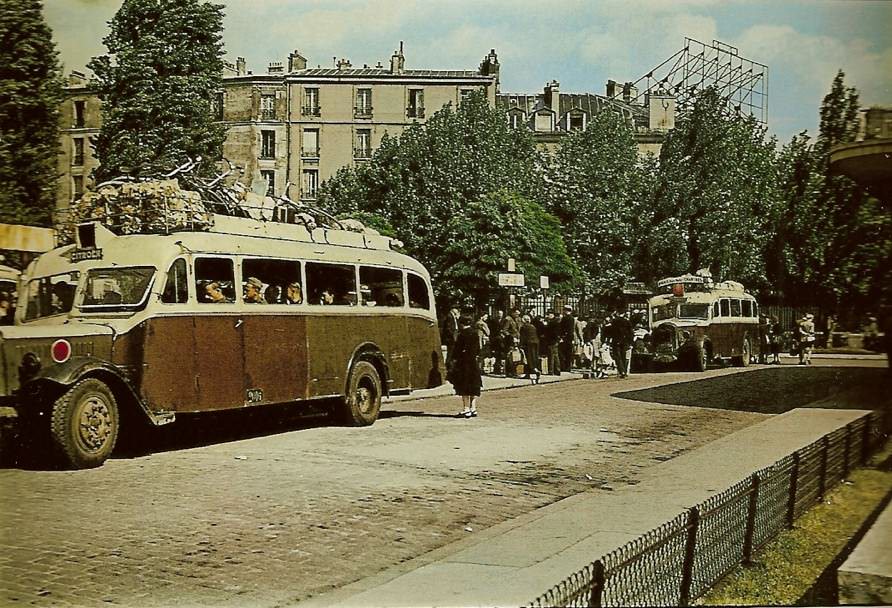
robust and less costly to produce than any rival product at the time. From the middle of the 19th century people had found it easier to travel with the growth of the railway. During the 1914-1918 war, the army trained many men as drivers and mechanics. In rural areas the bus is less expensive than the train and can reach further. Being convinced of the supremacy of road transport, André Citroën decided to manufacture complete buses as well as cars. He adoptsed a new pioneering American technique with a metal frame assembled with electric welding. By 1931 he had also decided to create a bus operating company to offer ease of transport to a greater number of people (and importantly provide a market for his buses, typically a type C6G1 23-seater at the time). THE 1930s Founded in October 1931 by the well known car manufacturing company during difficult economic times, Transports Citroën was established as an interurban bus and coach operator. André Citroën also launched a taxicab company in Paris but that did not last long. As well as providing a ready market for the parent company's passenger transport vehicles - and an opportunity to showcase them to others - the new enterprise set about developing both local and long distance services in several parts of France. It is suggested that André Citroën had been much impressed by the Green Line coach network after a visit to London, and saw that something similar could be established around Paris. Prior to this time the motor coach in France had been viewed principally as being of use for tourism and excursion purposes, catering for the holiday maker rather than being employed in point to point route for the benefit of the regular traveller. It was Citroën that effected this change of use and the initial network of radial routes from Paris (see map below) started in 1932 and exceeded expectations becoming a great success, to the extent that the size of the fleet had to be quadrupled for the second season in 1933. Success came quickly and confirmed the correctness of Citroën's views and shortly after the bus network covered a large part of French territory and for several generations the operations of Transports Citroën have been closely involved in the daily lives of French people. The bus stop signs marked with the double chevron became a meeting point and the beige and brown buses accompanied the changing circumstances of their lives, at the mercy of events, be they daily or exceptional, be they happy or sad. It could be that Transports Citroën acted quickly with good foresight before the pending law (introduced from 1934 onwards) for co-ordination of transport which tended to favour the railways and constrain bus operators from introducing additional routes thereafter. So Citroën asked his concessionaires to start bus routes and they helped to finance their establishment in many provincial cities around the country. The biggest companies operated two to three hundred vehicles. Amongst the new routes Grenoble was linked to Lyon every half hour and Lyon to Saint-Etienne every hour. And of course the buses were great publicity for the company's products and motor cars. In 1931 Michelin commenced publication of a timetable book 'l'Indicateur des autobus et des autocars' which was followed in 1933 by 'l'Indicateur officiel des transports routiers Quillet'. The Quillet publication seems to have been short-lived however with only four or five issues. Paul Joseph was appointed director-general and the first Citroën network had been meant to operate in the Paris area, starting with a route to Versailles to operate every half hour. All was ready to commence on 18th Febuary 1932 with twelve Citroën C6G1 22-seater buses but on the very day before the start had to be delayed because of objections about competition with their own Versailles route from STCRP (the Paris transport authority). Mr Mariage the director of the STCRP had Citroën's route authorisation annulled by the Minister of Public Works. Agreement was eventually reached on avoiding competition, and the operation of the light brown with orange band liveried vehicles around suburban Paris started in August 1932 (but not to Versailles!). So it was that the first Citroën routes actually started a long way away from Paris in Lyon in June 1932 (nine lines, with the very first to Bourg-en-Bresse, from an operating base at 41 Rue du Lieutenant-Colonel Girard à Lyon); followed by the networks at Bordeaux (started 8th June, but ceded to the Citram company (established in 1919) by the end of the year); then Nantes (started 13th July, six lines, the first route to Le Croisic) and Strasbourg as the year progressed. The first route from Paris began on 28th August, from the Place de la Concorde to Fontainebleau. This was soon followed by routes to Creil and Mantes in September, whilst October saw the start of a route to Chartres. By 31st December 1932 there were 52 lines across the first four networks, totalling 3716 kilometers of route transporting 15,900 passengers daily and covering 70,585 kilometers a day. The Paris network alone comprised 19 lines totalling 1,400 kilometers, running 40,000 kilometers a day. Within a range of about 100 kilometers most of the principal towns of the Ile de France were linked to the capital city. The expansion of the Paris network was rapid at this time: in December 1932 there were 19 routes, four months later in April 1933 there were 48. Citroën ventured also into longer distance routes, including Paris to Dijon, to Lille, to Reims, to Amiens, to Lisieux and to Tours. For both the Renault and Citroën companies there were protective restrictions on short distance passengers on the sections of route nearest to Paris. With the increasing number of routes the Place de la Concorde terminus in central Paris became impractical and was soon replaced in mid-1933 by three peripheral termini at Porte Maillot (Boulevard Gouvion Saint-Cyr); Rotonde de la Villette and Place Denfert-Rochereau (Rue Froideveaux). In 1939 the latter was replaced by Bastille (on the corner of the Quai de la Rapée). Routes from the terminus at the Rotonde de la Villette were operated from a garage in the nearby Rue Louis Blanc (near the Gare de l'Est), whilst the routes from the other two departure points were operated from the Rue d'Alsace garage in Levallois, next to the central workshops. The head office was established at 17 Boulevard des Capucines in Paris. The rival Renault company also started routes in the Paris area from the end of 1932. Their blue liveried buses with white band, typically 6-cylinder diesels with 32 seats, were to remain primarily concentrated on the greater Paris area, often in fierce competition with Citroën. After the second season's operations an amicable arrangement was made between the two rival companies as there was plenty of scope and custom for both. From the famous factories on the Quai du Javel in Paris (occupied from 1915 to 1974) growth had been rapid and eight hundred steel-bodied 22 seater Citroën model C6G1 were delivered between 1931 and 1933. A larger vehicle with 29 seats (type 45) followed at the end of 1933 and was used principally for the long distance routes from Paris. As with many French rural operators, the carriage of parcels (messageries) played an important part in the operations. |
André Citroën a lancé la première
production en série de voitures automobiles en 1919 en reconvertissant
son ancienne fabrique d’armes.
Jusque-là, la voiture avait été la prérogative
des gens riches et il avait
l'intention d'étendre son utilisation à d'autres classes sociales. Il a
été le pionnier du concept moderne de création d'un réseau de vente et
de services complémentaire à la voiture. Le mandat de Citroën était
typiquement exigeant et simple: produire un tout nouveau design pour
une voiture de 10 CV qui serait mieux équipé, plus robuste et moins
coûteux à produire que tout autre produit concurrent de l'époque. À partir du milieu du XIXe siècle, il était plus facile de voyager avec la croissance du chemin de fer. Pendant la guerre de 1914-1918, l'armée a formé de nombreux hommes à la conduite et à la mécanique. Dans les zones rurales, le bus est moins cher que le train et peut aller plus loin. Convaincu de la suprématie du transport routier, André Citroën décide de fabriquer des bus complets ainsi que des autos. Il adopte une nouvelle technique américaine pionnière avec un cadre en métal assemblé par soudage électrique. En 1931, il avait également décidé de créer une société d’exploitation de bus afin de faciliter le transport à un plus grand nombre de personnes (et surtout créer un marché pour ses bus, à l'époque un type C6G1 de 23 places). LES ANNEES TRENTES Fondée en Octobre 1931 par la société Citroën dans les moments difficiles, les Transports Citroën ont été établi pour exploiter les lignes d'autocars interurbains. André Citroën a également lancé une société de taxis à Paris, mais cela n'a pas duré longtemps. En plus de fournir un marché prêt pour les véhicules de transport de passagers de la société mère - et une opportunité de les présenter à d’autres - la nouvelle entreprise s’est engagée dans le développement de services locaux et interurbains dans plusieurs régions de France. Il semblerait qu'André Citroën ait été très impressionné par le réseau d'autocars Green Line après une visite à Londres et ait vu la possibilité de créer quelque chose de similaire autour de Paris. Auparavant, les autocars en France étaient principalement considérés comme utiles pour le tourisme et les excursions, prenant en charge les vacanciers plutôt que d’être utilisés sur des itinéraires point à point au bénéfice du voyageur régulier. C’est Citroën qui a procédé à ce changement d’utilisation et le réseau initial de liaisons radiales au départ de Paris (voir la carte ci-dessous) a débuté en 1932 et a dépassé les attentes, devenant un grand succès, au point que la taille de la flotte a dû être quadruplée pour la deuxième saison en 1933. Le succès a été rapide et a confirmé l'exactitude des propos de Citroën. Peu de temps après, le réseau de bus couvrait une grande partie du territoire français et, depuis plusieurs générations, les activités de Transports Citroën étaient étroitement associées à la vie quotidienne des Français. Les panneaux d’arrêt de bus marqués du double chevron sont devenus un point de rencontre et les bus beige et marron ont accompagné les circonstances changeantes de leur vie, qu’ils soient quotidiens ou exceptionnels, heureux ou tristes. Il est possible que les transports Citroën aient agi rapidement et avec prévoyance avant les lois en suspens (introduites à partir de 1934) pour la coordination des transports routiers et ferroviaires qui tendaient souvent à favoriser les chemins de fer et à contraindre les exploitants d’autobus à créer de nouvelles routes. Citroën a donc demandé à ses concessionnaires de démarrer rapidement les lignes de bus et ils ont aidé à financer leur établissement dans de nombreuses villes de province à travers le pays. Les plus grandes entreprises utilisaient entre deux et trois cents véhicules. Parmi les nouvelles routes, Grenoble était reliée à Lyon toutes les demi-heures et Lyon à Saint-Etienne toutes les heures. Et bien sûr, les bus constituaient une excellente publicité pour les produits et les voitures de la société. En 1931, Michelin commença la publication d'un horaire intitulé "l'Indicateur des bus et des autocars", suivi en 1933 par "l'Indicateur officiel des transports routiers Quillet". La publication de Quillet semble avoir été de courte durée, toutefois, avec seulement quatre ou cinq numéros. Avec M. Paul Joseph comme directeur-général le premier réseau Citroën avait été conçu pour fonctionner dans la région parisienne, avec la première ligne vers Versailles, toutes les 30 minutes. Tout était prêt pour commencer le 18 février 1932 avec douze Citroën C6G1 bus de 22 places, mais le jour même avant le début a dû être retardée en raison des objections de la STCRP (les transports parisiens) quant à la concurrence avec leur propre ligne de Versailles. M. Mariage le directeur de la STCRP avait l'autorisation de la ligne de Citroën annulée par le Ministère des Travaux Publics. Un accord éventuel est intervenu à éviter la competition, et l'exploitation des cars livrée brun clair avec bande orange autour de la banlieue parisienne a débuté en août 1932 (mais pas à Versailles!). C'est ainsi que les premières lignes de Transports Citroën commencait loin de Paris à Lyon en juin 1932 (neuf lignes, la première à Bourg-en-Bresse, au départ d'un installation à 41 Rue du Lieutenant-Colonel Girard à Lyon); suivie par les réseaux à Bordeaux (le 8 juin, mais cédé dès la fin de l’an aux Citram, société de transports dont la création remonte à 1919); puis Nantes (le 13 juillet, six lignes, la première au Croisic) et Strasbourg pendant que l'année avançait. La première ligne de Paris a commencé le 28 août, de la Place de la Concorde à Fontainebleau. Ce fut bientôt suivi par des routes à Creil et Mantes en septembre, et octobre avait vu le début d'une route vers Chartres. Au 31 décembre 1932, 52 lignes étaient en exploitation dans les quatre premiers réseaux exploitant 3716 km et parcourant chaque jour un total de 70 585 km. Les autobus Citroën transportaient quotidiennement 15 900 voyageurs, le seul réseau de Paris exploitait 19 lignes de 1 400 km, les cars parcourant 40 000 km par jour. Dans un rayon de près de 100 km, la plupart des grandes villes de l’Ile de France vont être reliées au centre de la capitale. L'expansion de reseau de Paris a été rapide à ce moment: en décembre 1932, il avait été 19 lignes. Quatre mois plus tard en avril 1933, il y avait 48. Citroën commencait aussi les lignes de longue distance: Paris à Dijon, Lille, Reims, Amiens, Lisieux et Tours. Pour les deux sociétés Renault et Citroën, il y avait restrictions pour la protection des sections de la ligne proche de Paris. Avec le nombre croissant de lignes au départ de la Place de la Concorde - au centre de Paris - est devenu impraticable comme terminus et a été rapidement remplacé mi-1933 par trois terminus périphérique à la Porte Maillot (Boulevard Gouvion Saint-Cyr); Rotonde de la Villette et la Place Denfert-Rochereau (Rue Froidevaux). En 1939, ce dernier a été remplacé par Bastille (à l'angle du Quai de la Rapée). Les lignes au départ de Villette ont été assurés d'un garage proche en la rue Louis Blanc (près de la Gare de l'Est). Les lignes exploités des deux autres points de départ ont été assurés par le garage de la rue d'Alsace à Levallois, à côté des ateliers centraux. Le siège de la société est installé au 17 Boulevard des Capucines à Paris. La société rivale Renault a également commencé les dessertes de la région parisienne après le fin de 1932. Leur bus livrée bleu avec une bande blanche, typiquement 6 cylindres diesel avec 32 sièges, restaient concentrée principalement sur la région parisienne, souvent en concurrence acharnée avec Citroën. Après les opérations de la deuxième saison un arrangement amicable a été conclu entre les deux sociétés rivales comme il avait assez de voyageurs pour les deux. Des célèbres usines sur le Quai du Javel à Paris (occupé de 1915 à 1974) la croissance a été rapide et 800 modèle Citroën C6G1, carossé en acier avec 22 places, ont été livrés entre 1931 et 1933. Un plus gros véhicule avec 29 sièges (type 45) a suivi à la fin 1933 et a été utilisé principalement pour les lignes à longue distance de Paris. Comme pour de nombreux opérateurs français en milieu rural, le transport de colis (messageries) jouait un rôle important dans les opérations quotidiens. |
||||||||||||||||||||||
|
|||||||||||||||||||||||
|
1933 saw the Citroën
networks
of Angers,
Lille and Mulhouse commence running. The light brown over dark brown
liveried vehicles spread further and by June 1933 there were
126 different routes totalling nearly 25,000 kilometres, of which over
9,700 kilometres were directly operated by subsidiaries, the balance by
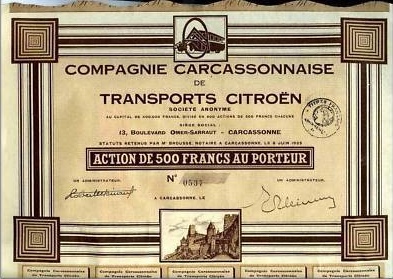
concessionaires. Carcassonne joined the network (Compagnie
Carcassonnaise de Transports Citroën). The Citroën networks were
carrying 36,000 passengers
daily, and the Paris suburban network numbered 58 lines.
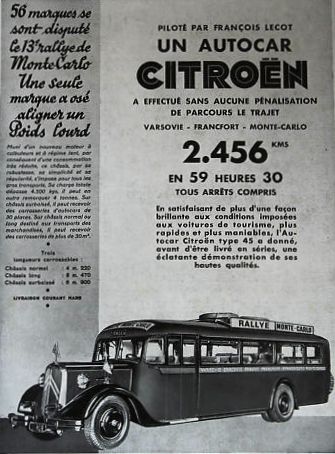
In December 1933 a more spacious and more powerful model than the C6 G1, the Type 45, the prototype of which gave a brilliant demonstration at the Monte Carlo rally. With this 29-seater model, Transports Citroën opens its major lines from Paris. But this time the railway companies, some of which the State has already saved from bankruptcy, are appealing to the public authorities. Their grievances are heard at government level, but at the same time, the departmental prefects attest that the population is very satisfied with Citroën services and that all lines have been opened without claiming the slightest subsidy. If the Treasury is afraid of Citroën, the departmental finances would have liked to know it earlier! Result, the rail-road coordination decree of 1934, far from sanctioning Citroën, freezes its achievements and is content to put under control any increase in the fleet and any new line openings. Expansion of lignes was rapid in the first few years for both the Citroen and Renault networks but officialdom was to intervene by a government decree of April 1934 for the national coordination of road and rail transport. It came to favour the latter because it excluded any change in route, with any such change being considered a new service. The new law worked well in protecting established operators, especially the railways whose routes were very unlikely to change. Thus Citroën and Renault, whilst they could not develop their networks further, did benefit from the protection of the law as already existing operators on limes already in operatin. (By way of comparison regulation of bus services in the United Kingdom had occurred earlier in 1931). |
1933, les réseaux Citroën d'Angers, Lille
et Mulhouse débutera
en marche. Les véhicules - livrée brun pale sur brun foncé - étaient
étendues plus loin et en Juin 1933 il y avait 126 lignes différentes
totalisant près de 25000 kilomètres, dont plus de 9700 kilomètres ont
été directement exploités par des filiales, le reste par les
concessionnaires. Carcassonne a rejoint le réseau (Compagnie Carcassonnaise de Transports
Citroën). Les réseaux Citroën portaient 36000
passagers par jour, et le réseau de la banlieue parisienne comptait 58
lignes.
En décembre 1933 un modèle plus spacieux et plus puissant que le C6 G1, le Type 45, dont le prototype fait une brillante démonstration au rallye Monte Carlo. Avec ce modèle de 29 places, les Transports Citroën ouvrent des grandes lines au départ de Paris. Mais cette fois les companies ferroviaires, dont l'Etat a déjà sauvé certaines de la faillite, en appellent aux pouvoirs publics. Leurs doléances sont entendues au niveau du gouvernement, mais en même temps, les préfets de département attestent que la population est très satisfaite des services Citroën et que toutes les lignes ont été ouvertes sans réclamer la moindre subvention. Si le Trésor public a peur de Citroën, les finances départementales auraient bien aimé le connaître plus tôt. Résultat, le décret de coordination rail-route de 1934, loin de sanctionner Citroën, fige les acquis et se contente de mettre sous contrôle tout accroissement de parc et toute nouvelle overture de ligne. L'expansion des lignes fut rapide dans les premières années, tant pour les réseaux Citroën que Renault, mais les autorités intervinrent par un décret gouvernemental d'avril 1934 pour la coordination nationale des transports routiers et ferroviaires. Elles favorisèrent ces derniers car elles excluaient tout changement d'itinéraire, tout changement de ce type étant considéré comme un nouveau service. La nouvelle loi fonctionna bien en protégeant les exploitants établis, en particulier les chemins de fer dont les itinéraires étaient très peu susceptibles de changer. Ainsi, Citroën et Renault, bien qu'ils ne puissent pas développer davantage leurs réseaux, bénéficièrent de la protection de la loi en tant qu'opérateurs déjà existants sur les lignes déjà en exploitation. (À titre de comparaison, la réglementation des services de bus au Royaume-Uni avait déjà eu lieu plus tôt en 1931). |
||||||||||||||||||||||
| Some
of the networks established
around the country were directly owned subsidiaries whilst others were
operated by concessionaires associated with Citroën (an example of the
latter being CTAC, Compagnie Armoricaine de Transports Citroën, in
Bretagne, with Citroën (and SCF
also) involved from formation in 1933 to 1941).
Amongst other towns with Citroën networks at this time were Amiens
(Transports Picardie Citroën), Nancy
(Société Lorraine des Transports Citroën), Reims and Troyes (Compagnie
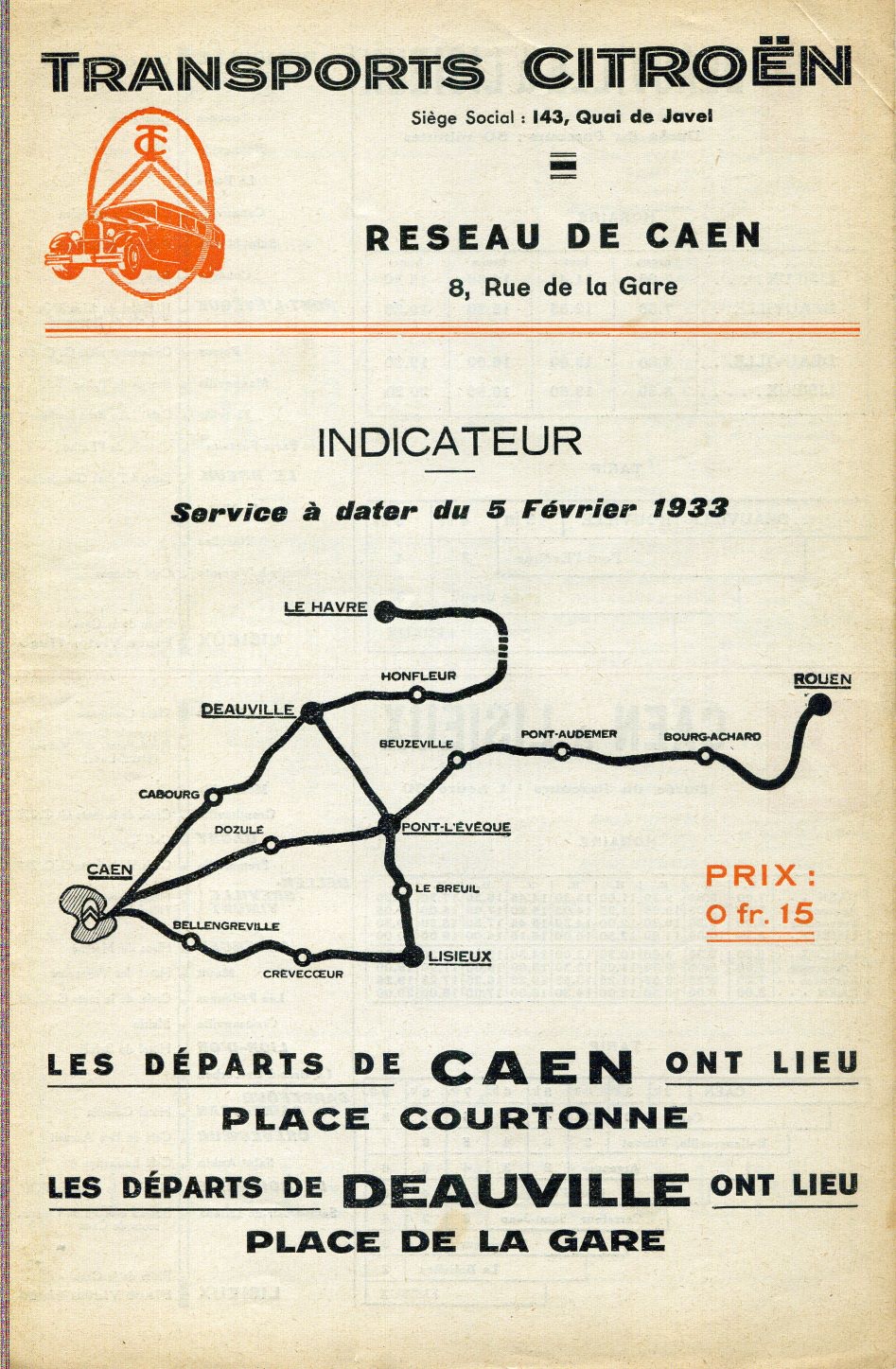
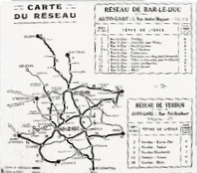
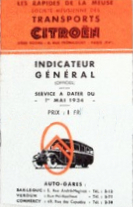
Transports Régionaux de l'Est et du Centre - Autocars Citroën). The concessionaire Lahaiville of Verdun and Bar-le-Duc started two networks based on those towns in 1933, operating as Rapides de la Meuse - Société Meusienne des Transports Citroën. Within a couple of years Citroën was in financial difficulty and the Meuse operation passed to the CFTA (Chemins de Fer et Transport Automobile) local rail company. Bus services were heavily curtailed during the war and then in 1945 operation of Rapides de la Meuse passed to SGTD, who had already been present as bus operators in the département of Meuse since 1929. Some early Citroën networks were short lived, running only for a few years under the manufacturers banner before continuing under other's ownership, eg at Rouen and Caen, both in Normandie. In Rouen the local concessionaire Ménager set up the CNA, Compagnie Normande d'Autobus, in March 1932. By the end of that year 61 vehicles were in operation but financial difficulties arose in paying for buses on order and ownership passed to M. Lireux in April 1934. The fleet, now including Renault buses as well, changed hands again in 1937 when CNA was sold to SGTD (Société Générale des Transports Départementaux - a substantial provincial bus operator across France, with a presence in 17 départements by 1929, and in 25 départements by 1945). Similarly at Caen where Transports Citroën - Réseau de Caen was established in October 1932. This was very quickly renamed Rapides de Normandie - Cars Citroën but also passed under SGTD control in 1936 and was merged into Les Courriers Normands in January 1937. Another similar operation was MATTEI at Marseilles. In reality André Citroën was an expansionist businessman rather than an accountant. Indeed, the Citroën firm had financial problems since its inception. Gains made during the production of wartime munitions were not sufficient to cover investments, with ninety per cent of earnings being spent on taxes. The sales of the first cars had certainly helped to relieve for a time the financial position of Citroën, but the constant and rapid growth of the firm generated many expenses. Financial problems loomed in December 1934, and Citroën filed for bankruptcy. The enterprise had grown too quickly and over-reached itself, not recouping the heavy investment in production lines for the new Traction Avant car. The intervention of the Michelin company in January 1935 saved the day and through restructuring and austerity the Citroën marque survived. Pierre Michelin became managing director. Michelin takes possession of the business but its policy is not to share. It only intends to control companies of which it will be the owner. Thus it retains all the Citroën Transport networks, but of the concessionary companies, only the Compagnie Saônoise des TC will remain in the group. In general, the dealers who have lost the support of Citroën in terms of transport prefer to stop. Mr. Decourt, a former employee of Citroën, takes over certain networks. The SGTD and Verney groups and others also acquire networks. André Citroën retired at this time at the age of 56 and died just a few months later in July. Following Pierre Michelin's death in 1937 Pierre Boulanger took over and remained in control until his death in 1950. Some of the associated regional networks left the Citroën fold over the years, including the Bordeaux, Rennes and Nancy networks; the latter ceded to Rapides de Lorraine. Others such as Tours became Rapides de Touraine, Rapides de Poitou, Rapides de Bourgogne, Rapides de la Meuse (this latter acquired by the SGTD group in 1945). Bordeaux had in fact been ceded to Citram at the end of 1932 after only a few months of operation by Citroën, in exchange for an agreement to provide a thousand vehicles over a ten year period. The Poitou operation changed from Transports Citroën du Poitou to Les Rapides du Poitou in April 1933. (Still based in Poitiers today, since 2001 Rapides du Poitou has been associated with the FAST group). The change in Bourgogne came in 1934 and the operations of Rapides de Bourgogne continuing to be focused still on the Yonne département. 1934 was the year of greatest activity with some eight hundred buses operating over some 300 routes. But some of the routes did not last for many years however because of their subsequent enforced withdrawal as part of the road-rail co-ordination policies progressively imposed on bus and coach operators from 1934 onwards by various changes of government to protect the railways. In 1934 the law for the Co-ordination of Rail and Road services put the brakes on the expansion of Transports Citroën by imposing new restraints: the alteration and introduction of routes was submitted to a process of public authorisation, with the objective of avoiding duplication between road services and SNCF rail services. Followed by the near 'nationalisation' of the almost bankrupt railways to form state monopoly SNCF in 1937. By then the few golden pre-war years of bus and coach operation had passed. This upset mattered badly for bus and coach operators with power being transferred to departmental prefects, with the cancelling or withdrawal of services (or not) left in their hands. |
Certains
des réseaux établis à travers le pays ont été filiales directes
tandis que d'autres ont été exploités par des concessionnaires associé
à Citroën (un exemple de ce dernier étant le CTAC, la Compagnie
Armoricaine de Transports Citroën, en Bretagne, avec Citroën (et la SCF
aussi) impliqués
de la formation en 1933 à 1941). Parmi les autres villes avec des
réseaux Citroën à cette époque étaient Amiens (Transports Picardie
Citroën), Nancy (Société Lorraine des Transports Citroën), Reims et
Troyes (Compagnie des Transports Régionaux de
l'Est et du Centre - Autocars Citroën). Le concessionnaire Lahaiville de Verdun et Bar-le-Duc a commencé deux réseaux basés sur ces villes en 1933, fonctionnant comme les Rapides de la Meuse - Société des Transports Citroën Meusienne. Au sein de peu quelques années Citroën était en difficulté financière et le réseau Meusienne a passé à la CFTA (Chemins de Fer et Transports Automobiles) la compagnie ferroviaire locale. Les services de bus ont été fortement réduits pendant la guerre et ensuite en 1945 l'exploitation des Rapides de la Meuse a passé à SGTD, qui avait déjà était présent dans le département de la Meuse depuis 1929. Certains des premiers réseaux Citroën étaient de courte durée, ne fonctionnant que pendant quelques années sous la bannière des fabricants avant de continuer sous d'autres propriétaires, par exemple, à Rouen et à Caen, tous les deux en Normandie. A Rouen M. Ménager la concessionnaire local mis en place la CNA, la Compagnie Normande d'Autobus, en Mars 1932. À la fin de cette année 61 véhicules étaient en opération, mais les difficultés financières surgi dans le paiement pour les autobus sur l'ordre et la propriété fut transmise à M. Lireux en avril 1934. Le parc, qui comprend maintenant des bus Renault aussi, ont changé de mains à nouveau en 1937, lorsque la CNA a été vendue à SGTD (Société Générale des Transports Départementaux - un exploitant substantielle d'autobus provinciale à travers la France, avec une présence dans 17 départements en 1929, et dans 25 départements par 1945). De même à Caen, où les Transports Citroën - Réseau de Caen a été créé en Octobre 1932. Ce fut très vite rebaptisé Rapides de Normandie - Cars Citroën mais a passé aussi sous le contrôle SGTD en 1936 et a été fusionné dans Les Courriers Normands en Janvier 1937. Un autre exploitant semblable était MATTEI à Marseille. C'est vrai que M. André Citroën est davantage un expansionniste qu'un comptable. L'entreprise Citroën connaît des problèmes financiers depuis sa création. Les bénéfices acquis lors de la production de munitions de guerre ne furent pas suffisants pour couvrir les investissements, 90% des gains ayant été dépensés en taxes. La ventes des premières automobiles ont certes permis de soulager un temps la situation financière, mais l'incessante et rapide croissance de la firme Citroën engendre de nombreuses dépenses. Les problèmes financiers arrivent en Décembre 1934, et Citroën a fait faillite. L'entreprise avait grandi trop vite et n'avait pas récupérer les lourds investissements dans les lignes de production pour le Traction-Avant. L'intervention de la société Michelin en Janvier 1935 a sauvé l'entreprise et par la restructuration et l'austérité la marque Citroën ont survécu. Pierre Michelin devient directeur général. Michelin prend possession de l'entreprise mais sa politique n'est pas de partager. Elle entend uniquement contrôler les sociétés dont elle sera propriétaire. Ainsi elle conserve tous les réseaux Citroën Transport, mais des sociétés correspondantes, seule la Compagnie Saônoise des TC restera dans le groupe. En général, les concessionnaires qui ont perdu le soutien de Citroën en matière de transport préfèrent s'arrêter. M. Decourt, ancien salarié de Citroën, reprend certains réseaux. Les groupes SGTD et Verney et d'autres acquièrent aussi des réseaux. M. André Citroën prend la retraite à cette époque à l'âge de 56 ans et il décede quelques mois plus tard en Juillet. Après la mort de Pierre Michelin en 1937 Pierre Boulanger a repris le direction et reste en contrôle jusqu'à sa mort en 1950. Certains des réseaux régionaux associés ont quitté le giron Citroën au fil des ans, y compris les réseaux de Bordeaux, Rennes et Nancy; le dernier cédée aux Rapides de Lorraine. Des autres comme Tours ont devenus les Rapides de Touraine, Rapides de Poitou, Rapides de Bourgogne, Rapides de la Meuse (ce dernier acquis par le groupe SGTD en 1945). Bordeaux avait en effet été cédée à la Citram au fin 1932 après seulement quelques mois d'opération par Citroën, en échange d'un accord pour fournir un millier de véhicules sur une période de dix ans. L'opération Poitou changé de Transports Citroën du Poitou à Les Rapides du Poitou, en avril 1933. (Toujours basé à Poitiers aujourd'hui, depuis 2001 Rapides du Poitou a été associé avec le groupe FAST). Le changement est venu en Bourgogne en 1934 et les opérations de Rapides de Bourgogne continuent à se concentrer encore sur l'Yonne. 1934 fut l'année de la plus grande activité avec quelques huit cent autocars fonctionnant sur quelque 300 lignes. Mais certaines des routes n'a pas duré pendant de nombreuses années en raison de leur retrait subséquent forcé dans dans le cadre des politiques de coordination rail-route progressivement imposées aux exploitants d'autobus et d'autocars par plusieurs changements de gouvernement à partir de 1934, pour protéger le rail. En 1934, le décret-loi de Coordination du Rail et de la Route freine l’expansion de la Société Transports Citroën en lui imposant des contraintes nouvelles: la modification et la création de lignes sont désormais soumises à l’autorisation des Pouvoirs Publics. Objectif d' éviter les doubles emplois entre les lignes routières et celles de la SNCF. Avec les chemins de fer près de la faillite la SNCF est devenue monopole d’Etat en 1937. D'ici là, les quelques années d'or de l'exploitation d'avant-guerre des bus et autocars s'était passé. Cette matière bouleversé mal pour les exploitants d'autobus et d'autocars avec le pouvoir transféré aux préfets de département, avec l'annulation ou le retrait des services (ou non) dans leurs mains. |
||||||||||||||||||||||
|
|||||||||||||||||||||||
|
|||||||||||||||||||||||
|
|||||||||||||||||||||||
|
|||||||||||||||||||||||
|
|||||||||||||||||||||||
 |
 |
||||||
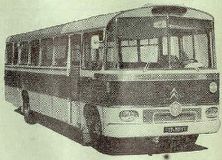
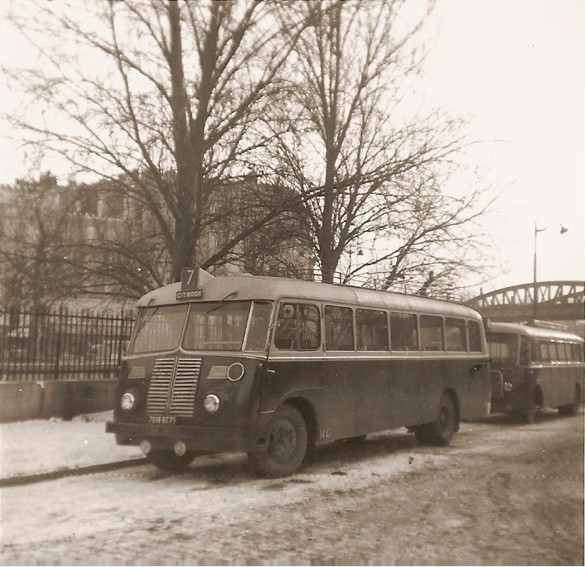
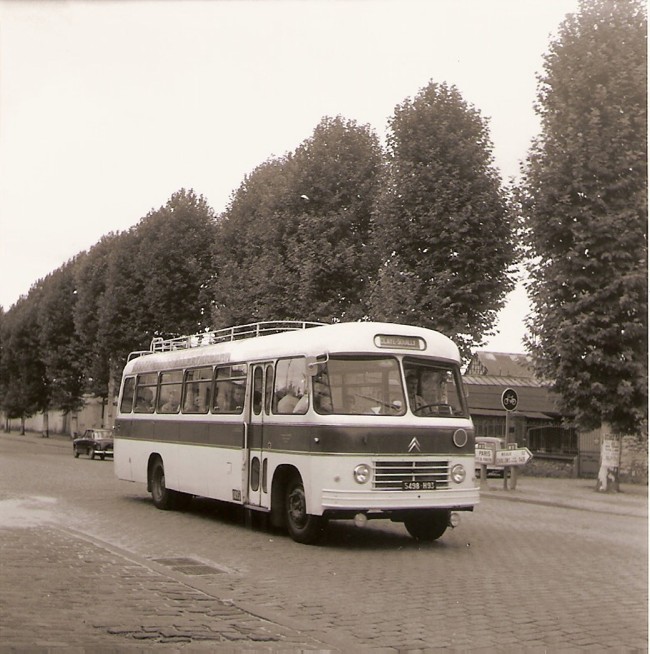
| AFTER THE WAR Operations were inevitably difficult and disorganised during the war years, some networks being in the occupied zone, others in the part governed by the Vichy regime. Many vehicles were requisitioned and those that continued in operation had to be fuelled by gas produced by burning wood or charcoal. The difficulties of day-to-day operation during the occupation were not inconsiderable. After the war some vehicles were found in Holland and Portugal. The principal networks were brought back into operation and by the early 1950s those networks - although slimmer in routes - were prospering. These were good years. But before many years later the circle of decline would start to set in with the growth of the private car and the move in population from country to town. By 1948 the type 45 was becoming the standard vehicle across the networks, reaching a level of 850 vehicles. The model 45 was diesel-engined but still with 29 seats. The model 47 of 1959 with forward control enabled an uplift to a seating capacity of 36. The year 1951 saw 141 routes in total in the thirteen different subsidiary networks. However as the 1950s progressed the vehicles operated by Transports Citroën were becoming more and more old fashioned, being still direct descendents of the original pre-war models. These outdated coaches with their hard suspension contributed to a loss of passengers, who compared them unfavourably with the more comfortable models of other operators and manufacturers. By 1965 there were 182 routes in operation, and it was not until that year that the model T60 arrived, offering a greater deal of comfort and better suspension. With a six cylinder diesel-engine and bodywork by Heuliez, the model T60 became the emblem of the company, appearing on publicity and in timetables, proudly declaring the 18,000 kilometres of routes and the 8,000 communities then served. The livery, which was originally brown with an orange band, later chestnut brown with red band and bluish grey pavillon, changed again to white body with carmine red band. In 1967 Citroën (by then owned by the Michelin group) was merged with Berliet, and the last T60 was delivered to the Strasbourg network in 1970. With the growing impact of the private car the rural bus was in decline. Nationally the length of all operators regular bus services fell from 436,500 kilometers in 1962 to 398,680 kilometers in 1971. In the same timeframe the length of special schools services jumped from 116,900 kilometers to 511,000 kilometers. From 1961, the effects of the post-war baby boom of 1947–1950 led to a sharp increase in the number of school buses needed daily. This activity will increase from 1963 with the age of compulsory schooling raised from 14 to 16 years. These changes contributed to a new initiative whereby tourism activities (which had been almost non-existant for Citroën until now) started to become developed strongly. Each of the networks launched this new tourism activity which required more sophisticated equipment than the buses of the regular routes. Transports Citroën turned to Berliet, an affiliated company, who provided the Cruisair 3 coach. In 1971 coaches came from Magirus-Deutz, followed in 1975 by an order for Verney TD5 coaches. 1974 saw the operation renamed as Transports Citroën - CITER and a network of travel agencies was set up under the CITER name (the first had been opened in Paris in 1967. Reductions in bus and coach operations took place in the 1970s. The Lille and Mulhouse networks were disposed of and there were cutbacks in the Paris area too, with the Charenton network based on Paris-Bastille passing to Cars Verts about 1970, leaving the two remaining networks based on Paris-Villette and Paris-Maillot. At the time the latter still included longer routes of some three hours duration as far as places like Rouen, Elbeuf, Evreux and Senonches. By 1976 only three routes were still in operation in the Lille area and less than ten routes around Paris. Change continued and in April 1977, after 45 years, Transports Citroën was taken over by CFIT - Compagnie Française et Industrielle de Transports. CFIT was at the time jointly owned by the Michelin company and the Verney group (SCF). Yves-Michel Verney became President and Director-General. The Citroën networks were co-ordinated and integrated with those of Verney, which latter group found the Nantes network (which was retitled Compagnie des Transports de l'Atlantique) and the Angers network (which was retitled as Compagnie des Autocars d'Anjou) very useful additions to its own existing substantial operations across the west of France, neatly filling gaps in the interurban network. Replacement vehicles were now to be Verney's own products rather than those of Citroën or Berliet. The chain of CITER travel agencies was similarly integrated with those of Tourisme Verney and were renamed Nord-Sud Voyages. The name CITER was retained for the self-drive hire car business. Thus in the late 1970s Transports Citroën faded away as a bus operator rather than coming to a definite end. The actual Transports Citroën company per se ceased to exist from 15 December 1978 when it was subsumed into GEFCO, a Peugeot subsidiary. Its only remaining activitiues at the time were self-drive hire and the transportation of new cars. During the 1980s the travel agencies Nord-Sud-Voyages became Tourisme Verney Distribution. In 1990 the Verney family bought out the Michelin interest and became fully independent again, although in later years they became part of the Connex group in 2002, which then later formed part of Veolia, with its wide range of international transport operations. |
L'APRES-GUERRE Les opérations ont été difficile et désorganisé pendant les années de guerre, certains réseaux étant dans la zone occupée, d'autres dans le régime de Vichy. De nombreux véhicules ont été réquisitionnés et ceux qui ont continué en opération devait être alimentée par du gaz produit par la combustion du bois ou du charbon. Les difficultés de fonctionnement quotidien pendant l'occupation ne sont pas négligeables. Après la guerre, on en retrouvera de bus en Hollande et au Portugal. Les principaux réseaux ont été remis en exploitation et par le début des années 1950 ces réseaux - bien plus fin dans les routes - prospéraient. Ceux-ci étaient des bonnes années. Mais avant de nombreuses années le cercle de la baisse commence avec la croissance de la voiture particulière et le déplacement de la population du pays à la ville. En 1948, le type 45 était en train de devenir le véhicule de série à travers les réseaux, atteignant un niveau de 850 véhicules. Le modèle 45 a été diesel, mais toujours avec 29 sièges. Le modèle 47 de 1959 avec le contrôle en avant a permis une extension à une capacité de 36. L'année 1951 a vu 141 lignes au total dans les treize réseaux différentes filiales. Cependant, comme les années 1950 a progressé véhicules exploités par Transports Citroën ont été de plus en plus désuet, étant descendants encore directe de l'original avant-guerre des modèles. Ces autocars dépassés avec leur suspension dure a contribué à une perte de passagers, qui les ont comparés défavorablement avec les modèles plus confortables d'autres opérateurs et les fabricants. En 1965, il y avait 182 lignes en opération, et il a fallu attendre cette année-là que le modèle T60 arrive, en offrant une plus grande face de confort et une meilleure suspension. Avec un six cylindres diesel-moteur et la carrosserie par Heuliez, le T60 modèle est devenu l'emblème de la compagnie, apparaissant sur la publicité et dans les horaires, a fièrement déclaré les 18000 kilomètres de lignes et les 8000 communautés à servir. Les couleurs, qui étaient au départ le brun avec une ceinture latérale orange puis le marron avec le pavillon gris bleuté et la bande de ceinture latérale rouge, changent une nouvelle fois : c’est le début de la caisse blanc Carrare avec la bande de ceinture rouge carmin. En 1967, Citroën (alors détenue par le groupe Michelin) a été fusionné avec Berliet, et le T60 dernière a été livré au réseau de Strasbourg en 1970. Avec l'impact croissant de la voiture privée, le bus rural était en déclin. À l'échelle nationale la longueur de tous les services réguliers d'autobus de tous les exploitants est passé de 436500 km en 1962 à 398680 km en 1971. Dans le même temps la longueur des services spéciales écoliers est passé de 116900 km à 511000 km. À partir de 1961, les effets du baby-boom d'après-guerre de 1947 à 1950 ont entraîné une forte augmentation du nombre de bus scolaires nécessaires quotidiennement. Cette activité va s'amplifier à partir de 1963 avec l'age de la scolarité obligatoire porté de 14 à 16 ans. Ces changements ont contribué à une nouvelle initiative par laquelle les activités touristiques (presque inexistantes pour Citroën jusqu'à présent) ont commencé à se développer fortement. Chacun des réseaux a lancé cette nouvelle activité touristique qui nécessitait des équipements plus sophistiqués que les bus des lignes régulières. Les Transports Citroën se tourne alors vers Berliet qui bientôt filiale de Citroën devient le fournisseur privilégié avec le Cruisair 3. En 1971 apparaissent les cars de tourisme Magirus-Deutz, enfin en 1975 est passée une commande de Verney TD5. 1974 a vu renommage comme Citroën Transports - CITER et un réseau d'agences de voyages a été mis en place sous le nom CITER. Réductions dans les opérations de bus et autocars a eu lieu dans les années 1970. Les réseaux de Lille et de Mulhouse ont été éliminés et il ya eu des compressions dans la région parisienne aussi, avec le réseau Charenton basés sur Paris-Bastille passant environ 1970 aux Cars Verts, laissant les deux réseaux restants basés sur Paris-Villette et Paris-Maillot. A l'époque ce dernier toujours inclus des routes plus longues de quelques durée de trois heures, jusqu'à Rouen, Elbeuf, Evreux et Senonches. En 1976 seulement trois lignes étaient encore en exploitation sur le réseau de Lille et moins de dix lignes autour de Paris.. Change continuait et en avril 1977, après 45 ans, les Transports Citroën ont été repris par la CFIT - Compagnie Française et Industrielle de Transports. CFIT était à l'époque détenue conjointement par la société Michelin et le groupe Verney (SCF). M. Yves Michel Verney devient Président Directeur Général. Les réseaux Citroën ont été coordonnées et intégrées avec celles de Verney, qui trouve ce dernier groupe du réseau de Nantes (qui a été rebaptisé Compagnie des Transports de l'Atlantique) et le réseau d'Angers (qui a été changé pour la Compagnie des Autocars d'Anjou) des additions très utiles à ses propres opérations existantes dans tout l'Ouest de la France, soigneusement combler les lacunes dans le réseau interurbain. Véhicules de remplacement devaient désormais être propres produits Verney plutôt que ceux de Citroën ou Berliet. La chaîne d'agences de voyages CITER a été pareillement intégrées à celles de Tourisme Verney, prenant le nouveau nom de Nord-Sud-Voyages. Le nom de CITER restant pour la location des autos sans chauffeur. Ainsi, vers le fin des années 1970, les Transports Citroën ont disparu progessivement comme exploitant d'autobus plutot que venir à une fin déterminée. La Société des Transports Citroën, réduite à ces deux activités de location sans chauffeur ainsi que le transport des voitures neuves, va vivre ses dernières heures avant d’être définitivement absorbée par GEFCO (filiale Peugeot) le 15 décembre 1978. Les agences Nord-Sud-Voyages deviennent Tourisme Verney Distribution courant des années 80. En 1990, la famille Verney a racheté les intérêts Michelin et devient totalement indépendant encore, bien des années plus tard ils sont devenus partie du groupe Connex en 2002, qui puis faisait partie plus tard de Veolia, avec son grande panoplie d'opérations de transport international. |
||||||
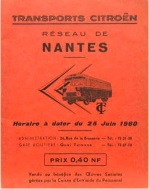
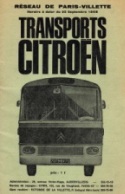
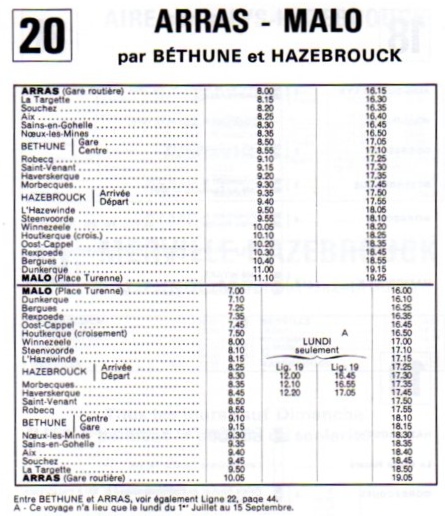
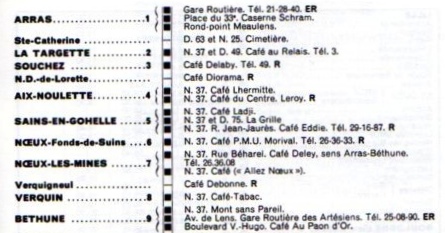
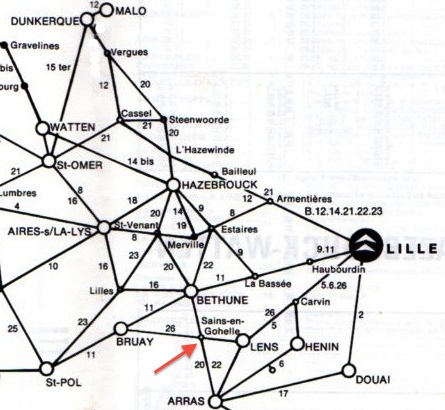
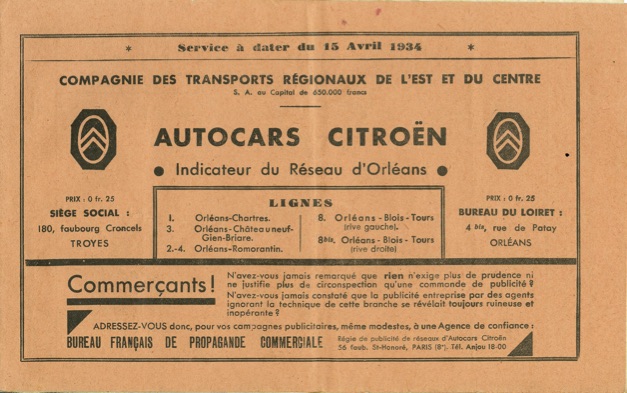
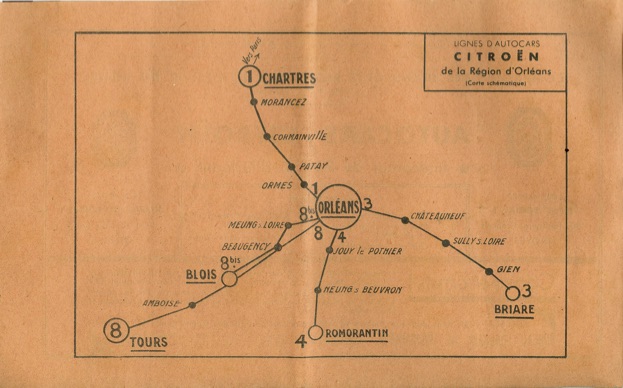
| TIMETABLES During 1971 I obtained timetable books for all of the then 13 existing Transports Citroën networks in France with the exception of Vesoul and Moulins, although I did have a 1970 example for the latter and 1965 for the former. The Vesoul network interacted with the Mulhouse routes at Belfort and Thann, and was more precisely called the Compagnie Saônoise des Transports Citroën. The Mulhouse network included several cross-border routes to Bâle in Switzerland. Timetables and maps are illustrated on the links below: |
HORAIRES En 1971, j’ai obtenu des horaires pour les 13 réseaux de transports Citroën existants en France à l’exception de Vesoul et de Moulins, bien que j’aie eu un exemple de 1970 pour ce dernier et de 1965 pour le premier. Le réseau de Vesoul interagissait avec les lignes de Mulhouse à Belfort et à Thann, et s'appelait plus précisément la Compagnie Saônoise des Transports Citroën. Le réseau de Mulhouse comprenait plusieurs lignes transfrontaliers vers Bâle en Suisse. Les horaires et les plans sont illustrés par les liens ci-dessous: |
||||||
|
|||||||
|
||||||||||||||||||||||||||||||||||||
|
||||||||||||||||||||||||||||||||||||
|
||||||||||||||||||||||||||||||||||||
|
||||||
|
||||||
| A table listing the
routes of known Transports Citroen networks in the 1930s and 1960s is here Un tableau présentant les lignes des réseaux de Transports Citroën connus dans les années 1930 et 1960 est ici |
||||||
|
I would be pleased to learn more about this
operator
if
any
French readers of
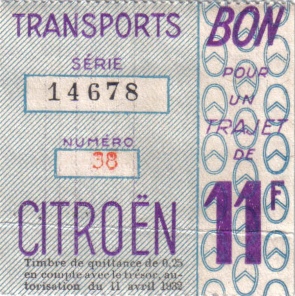
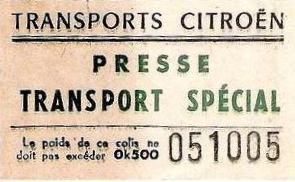
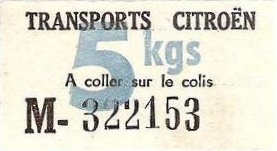
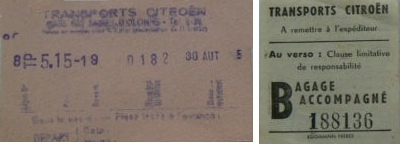
this page have further information. With many thanks to John Carman for his research over the years; to the ASPTV archives; to James Bunting for the timetables; and to Jean-Paul Machuré for the photos and to Thomas Salazar for the tickets. Avec un grand merci à John Carman pour ses recherches au fil des ans; aux archives ASPTV; à James Bunting pour les horaires; et à Jean-Paul Machuré pour les images et à Thomas Salazar pour les billets. |
 |
|||||